
Freightflow Logistics
Cutting inbound status calls with a shipment visibility platform.
Freightflow needed a clearer way for customers and operations teams to track freight movement. WK Digital built a practical portal that turned routine status chasing into self-service visibility.
Every routine update was costing the operations team time.
In logistics, customers want certainty. When shipment information is hard to find, simple status questions become phone calls, emails, and repeated manual follow-up from an already busy operations team.
Freightflow needed a system that could make shipment progress visible without adding administrative load. The goal was not a flashy dashboard. It was a reliable operational layer that helped customers find answers and helped staff focus on exceptions.
Primary outcome
40% fewer inbound status calls.
By giving customers direct access to shipment visibility, Freightflow reduced avoidable status enquiries and reclaimed around three hours of operational time each day.
A practical platform for freight visibility.
A live shipment visibility layer
WK Digital created a central portal for customers and operations teams to see current shipment status, milestones, and delivery information without needing to chase updates by phone.
Status workflows that reduced manual follow-up
The platform brought shipment events into a simpler operational workflow, helping Freightflow staff answer exceptions faster and spend less time repeating standard status information.
Customer-facing self-service
Customers could check shipment progress directly, which removed a large volume of routine inbound calls while improving transparency across the delivery journey.
Customers got answers faster. Staff got time back.
The new visibility platform supported more than 800 tracked shipments and made routine shipment updates available without a call to the Freightflow team.
For operations, the value was immediate: fewer interruptions, less duplicated communication, and more space to manage the freight movements that actually needed human attention.
The system solved the operational bottleneck before adding complexity.
The Freightflow project focused on the highest-friction customer interaction: "Where is my shipment?" By making that answer easier to access, the platform delivered measurable relief to the team while improving the customer experience.
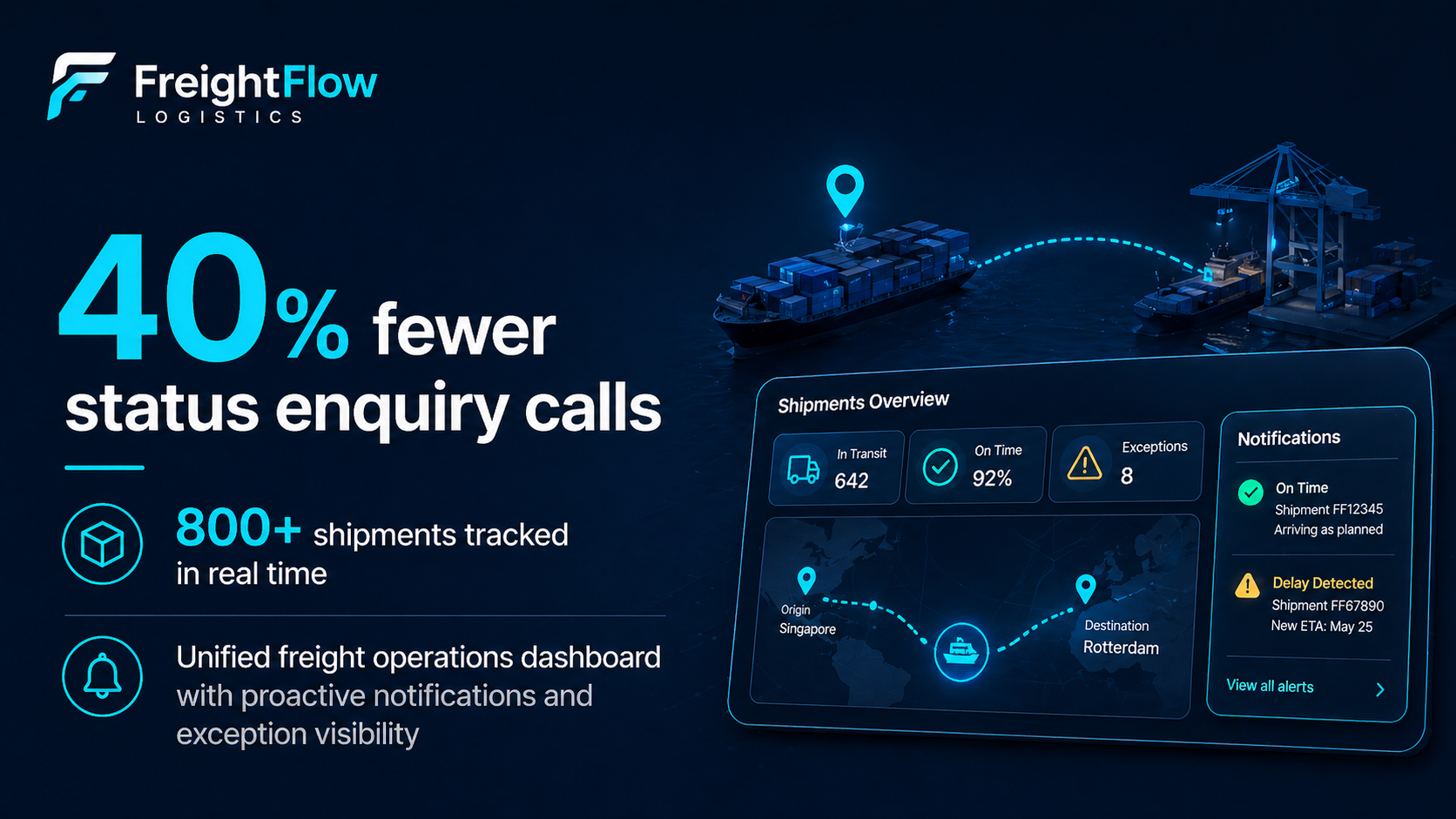
This build became the foundation for FreightFlow.
The Freightflow Logistics engagement proved the operating model: fewer status calls, clearer shipment visibility, and measurable time back for the team. WK Digital has packaged that thinking into FreightFlow, a product for Australian SME forwarders and customs agents.
30 minutes. Your operations. Our honest take.
A strategy session isn't a discovery call. It's a working conversation. Come with a problem you're trying to solve — we'll tell you what we'd build, and whether you actually need us to build it.
Book a Strategy SessionFree • 30 minutes • No obligation • We'll give you our honest assessment